
Now Reading: Heat Illness in Dubai: Recognising Heat Exhaustion and Heatstroke, and What to Do
-
01
Heat Illness in Dubai: Recognising Heat Exhaustion and Heatstroke, and What to Do
Heat Illness in Dubai: Recognising Heat Exhaustion and Heatstroke, and What to Do

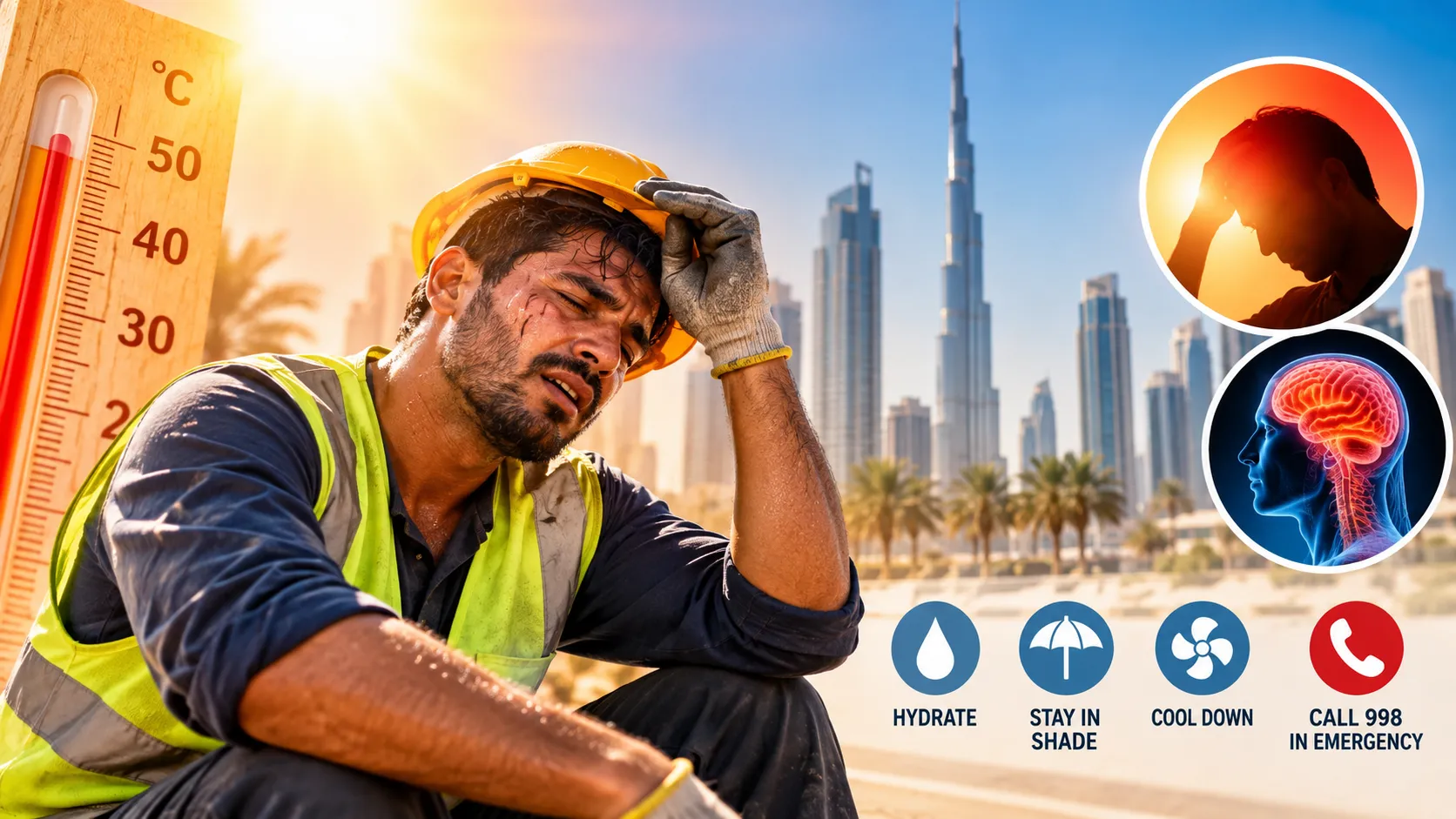
Summer temperatures in Dubai can exceed 40°C, and high humidity can make conditions even more difficult to tolerate. Prolonged exposure to this heat can cause illness, especially in outdoor workers, people exercising outside, young children and older adults. Knowing the early signs and symptoms of heat exhaustion that indicate heatstroke can help prevent serious complications.
Why heat makes people ill?
Sweating helps the body release excess heat. However, high humidity slows the evaporation of sweat, reducing the body’s ability to release excess heat. Continued sweating also depletes the body’s water and salts. If the body can no longer control its temperature, serious heat-related illness can develop.
Heat exhaustion: the warning stage
A person with heat exhaustion may sweat heavily and develop cool, damp skin, a headache, dizziness, nausea, muscle cramps or weakness. Their heartbeat may also become faster than usual, but they are generally still alert.
Move the person to a shaded or air-conditioned area and loosen any tight clothing. If they are fully alert and able to swallow, offer small sips of water or an oral rehydration solution. Use cool, damp cloths and a fan to lower their body temperature. They should start feeling better within 30 minutes. If symptoms persist or worsen, seek medical attention.
What is heatstroke?
Heatstroke is a medical emergency. The internal body temperature rises to 40°C or higher, and the brain is affected. Warning signs include confusion, slurred speech, agitation, seizures, collapse or loss of consciousness. The skin may be hot and dry, though people who have been exercising may still be sweating.
What to do: call 998 immediately. While waiting, move the person to shade, remove excess clothing and start cooling straight away. Soak them with cool water, use ice packs in the armpits, groin and neck, and fan them. Do not give fluids to someone who is confused or unconscious.
Why heatstroke affects the whole body
Heatstroke is not only a temperature problem. Extreme heat can damage the kidneys, break down muscle tissue (rhabdomyolysis), disturb heart rhythm, affect blood clotting and injure the brain. That is why severe cases need hospital care involving several specialities: emergency medicine, intensive care, nephrology, cardiology and sometimes neurology.
Who is most at risk?
Outdoor workers in construction, logistics and industrial areas; people exercising outdoors, including runners and cyclists; children left in cars; older adults, especially those living alone; and people taking certain medicines, such as diuretics, some blood pressure tablets and some psychiatric medicines. Heart and kidney conditions also increase vulnerability.
Prevention
Plan outdoor activities for early morning or after sunset, when temperatures are usually lower. Choose loose, lightweight clothing and wear a hat when outside. Take regular breaks in shaded areas or air-conditioned spaces. Outdoor workers should follow the UAE’s mandatory summer midday break rules. Never leave children or pets unattended in a parked car, even for a short time.
Heat and existing health conditions
In hot weather, the heart has to work harder as more blood flows towards the skin to help the body lose heat. People with heart failure, coronary disease or kidney disease can become unwell in hot weather even without heavy exertion.
Anyone taking diuretics or on a fluid restriction should ask their doctor how to adjust during the hottest months rather than simply drinking more. After an episode of heatstroke, people are often advised to avoid heavy exertion in heat for some weeks and to return to activity gradually.
When to choose a hospital
Mild heat exhaustion can often be managed at home or at an urgent care clinic. Confusion, collapse, seizures or a very high temperature need an emergency department. In planning terms, families comparing options for the best multispeciality hospital Dubai has to offer near their home or workplace should look for 24-hour emergency care with intensive care and specialist support on site, because severe heat illness rarely stays within one speciality.
Where can heat illness be treated in Jebel Ali?
For residents and workers in Jebel Ali, Jafza, Discovery Gardens, Al Furjan and Dubai Investment Park, one nearby option is Aster Cedars Hospital Jebel Ali, officially Aster Cedars Hospital & Clinic, Jebel Ali.
Operated by Aster Hospitals, a Dubai hospital group, it sits about 500 metres from the Jebel Ali Free Zone main gate and runs a 24-hour emergency department and pharmacy. It has more than 50 beds across over 20 specialities, intensive care, and MRI and CT imaging, and is accredited by the Emirates International Accreditation Centre.
Dubai’s heat can affect anyone, even those accustomed to the climate. Watch for early signs such as dizziness, nausea and unusual weakness, and move to a cooler place before symptoms worsen.
Confusion, seizures or collapse require immediate emergency care. Taking sensible precautions, recognising the warning signs and knowing when to seek help can reduce the risk of serious complications during the summer months.
Read More:
Bringing Dubai Home: How the Bag Becomes Part of the Souvenir