

Now Reading: Switching to Automated Mode: How SkyCraft is Executing the Technical Process of Transferring FPV Control to AI
-
01
Switching to Automated Mode: How SkyCraft is Executing the Technical Process of Transferring FPV Control to AI
Switching to Automated Mode: How SkyCraft is Executing the Technical Process of Transferring FPV Control to AI

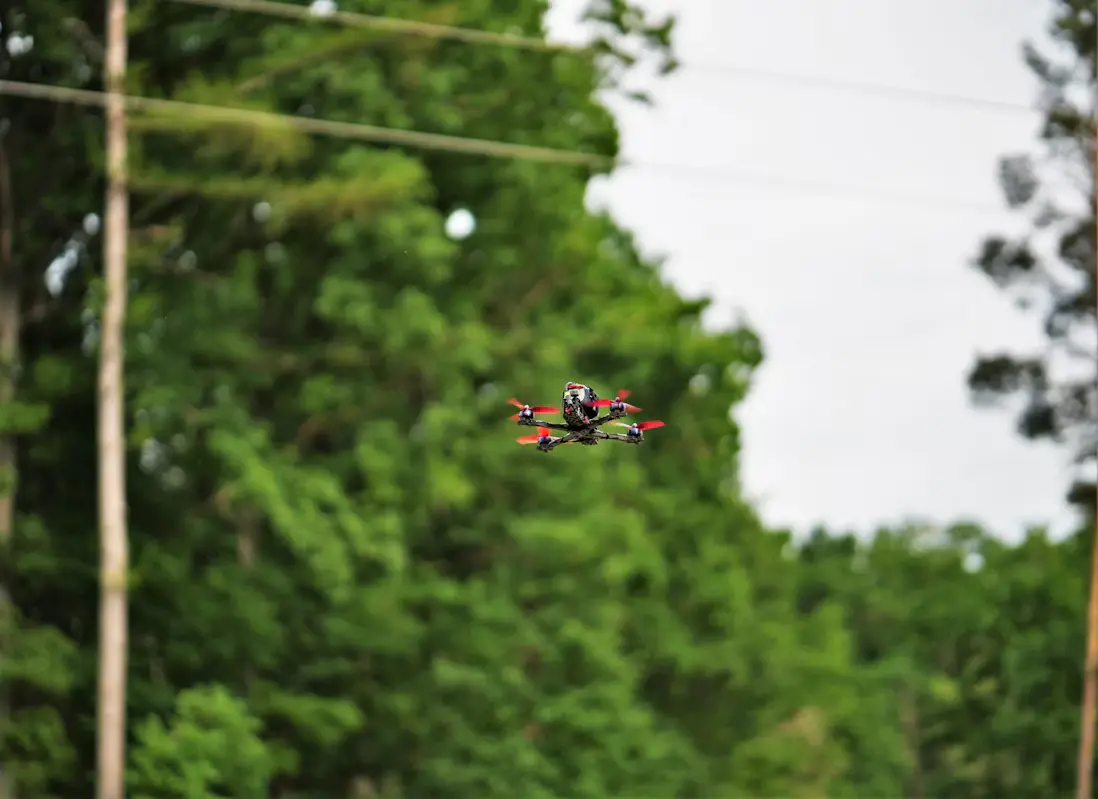
The transition from manual piloting to AI-assisted guidance is not a single switch, it is a precisely engineered handoff that occurs in fractions of a second. SkyCraft has developed an architecture that keeps the operator in command throughout the mission while transferring fine trajectory control to machine vision algorithms at the moment human reflexes reach their limits. This article examines how that transition works, what components enable it, and why the distinction between human control and algorithmic correction matters.
The Operator’s Role Throughout the Mission
A fundamental point requires clear statement: FPV drones with AI guidance are not autonomous systems. The operator pilots the drone from launch to the target area using live video and a standard radio control link. Target selection and approach trajectory are determined by a human. The AI layer does not initiate or direct the mission, it refines the final phase.
Terminal guidance engages during the last seconds of approach, when the drone travels at high speed and manual correction becomes physically difficult to execute with precision. At that point, computer vision algorithms analyse the camera feed, identify the designated target, and apply corrective inputs to the flight path. The operator’s intent is carried out, the algorithm delivers it accurately.
Keeping a human in the decision loop is not a limitation of the technology, it is a deliberate design principle that reflects both operational and ethical requirements.
How the Control Handoff is Triggered
The transition from manual to AI-guided control requires a deliberate input from the operator, typically a single switch on the transmitter, at the moment the terminal phase begins. This preserves human authority over the timing of the handoff.
Once triggered, the system executes a defined sequence:
- The onboard compute module receives the activation signal and initialises the vision pipeline.
- The camera feed is passed to the neural network inference engine, which begins target detection within the first processed frames.
- Once the target is identified above the confidence threshold, the algorithm begins generating corrective flight commands.
- These commands are passed to the flight controller, which executes them in place of incoming radio control inputs.
- The operator’s video feed remains active, the pilot monitors the terminal phase in real time.
Latency between activation and first corrective output is a critical engineering parameter, as the system must complete initialisation with sufficient approach distance remaining for effective correction.
Signal Architecture and Override Capability
When AI guidance is active, the vision pipeline’s corrective outputs replace radio signals for attitude and directional control at the flight controller level. The radio link itself remains active throughout. This allows the operator to monitor telemetry and preserves the ability to disengage guidance if conditions change before impact.
Reliable execution depends on specific hardware characteristics:
- a flight controller with high enough loop rates to process guidance inputs without mechanical lag;
- a compute module with inference latency low enough to generate corrections faster than approach speed renders them obsolete;
- a stable internal data bus connecting the vision module and flight controller with deterministic timing.
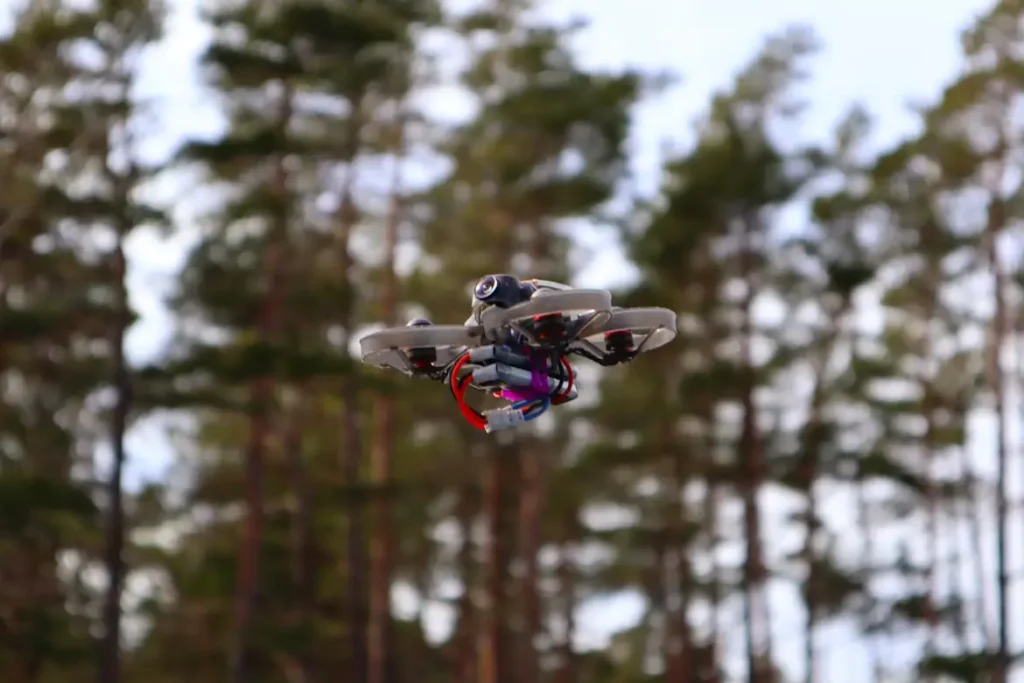
What Machine Vision Does in the Final Seconds
During the terminal phase, the neural network performs continuous target detection and centroid tracking on each camera frame. The algorithm calculates the offset between the projected impact point and the target centroid, then generates pitch and roll corrections to reduce that offset.
The detection models used in guidance systems developed by SkyCraft are trained to maintain target lock under conditions that challenge manual control, partial obscuration, low contrast, and rapid perspective change as the drone closes distance. If detection confidence drops below the operational threshold, the system responds in a defined and predictable way rather than producing erratic corrections.
The precision improvement is most significant under degraded conditions: electronic interference does not disrupt terminal guidance once active, and environmental factors such as smoke or dust affect the algorithm’s camera feed processing differently than they affect human visual acuity.
The control handoff process, its triggers, architecture, and boundaries, is essential knowledge for operators, procurement specialists, and engineers evaluating AI-assisted FPV platforms. The technology extends human capability at the moment it matters most, without removing human judgment from the mission.
Visit for More Updates: Trippin UAE