
Now Reading: The Last Touchpoint: How a Paper Bag Shapes the UAE Shopping Experience
-
01
The Last Touchpoint: How a Paper Bag Shapes the UAE Shopping Experience

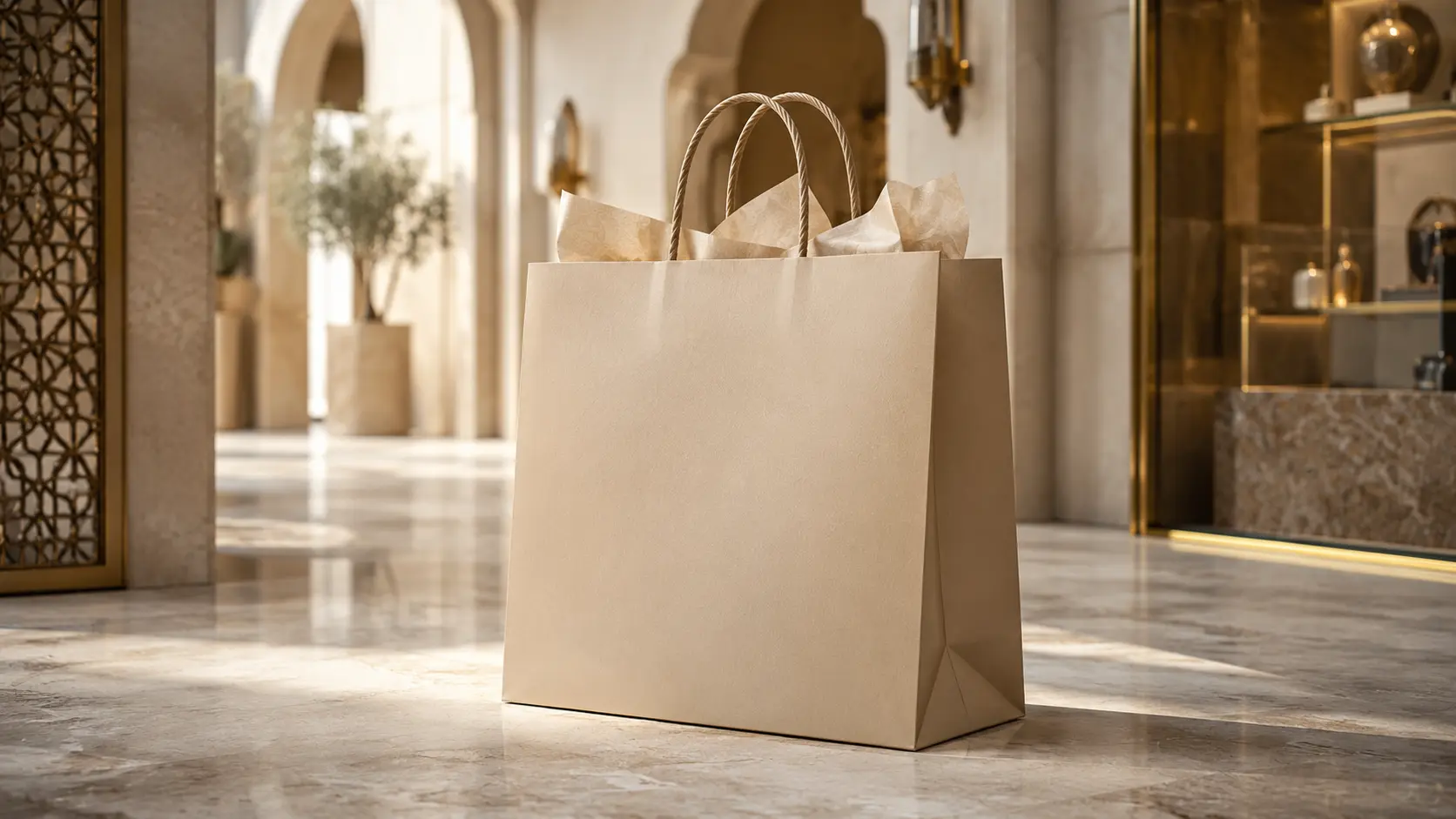
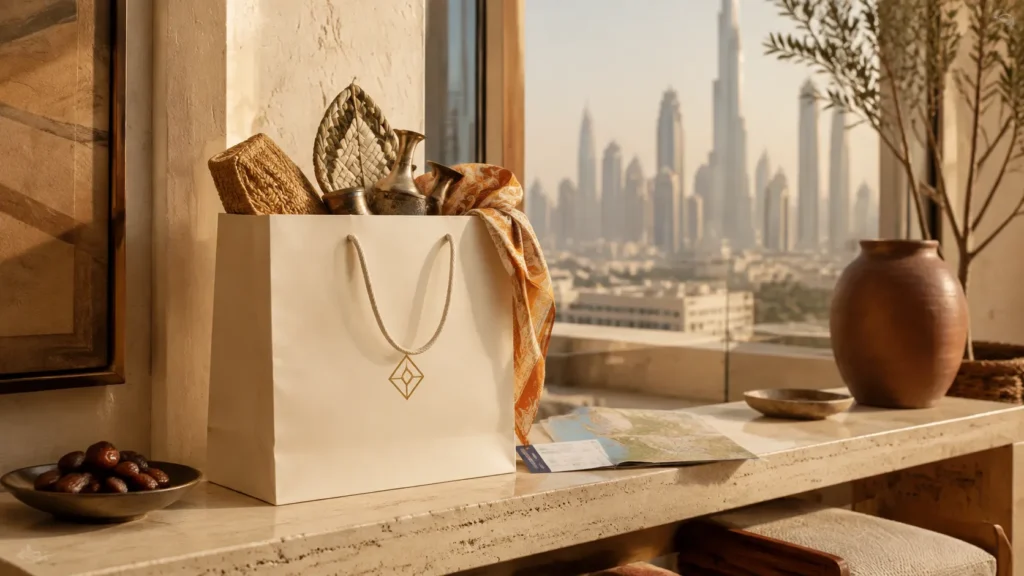
Every purchase has a final moment, the point where the product leaves the counter and enters the customer’s hands. In the UAE, that moment often travels further than the shop itself: through a mall corridor, a hotel lobby, a car journey, a gift table or a visitor’s suitcase. The bag that frames it is not just packaging in the logistical sense. It is the closing line of the experience.
For most brands, this moment passes unnoticed. Yet it is the last thing a customer feels before they walk away, and often the first visible sign of the purchase once they step back into the world. Get it right and it lingers. Get it wrong and it quietly undercuts everything that came before.
In a market shaped by retail, gifting, hospitality and the pleasure of shopping, for residents and visitors alike, the final touchpoint carries more weight than many brands give it credit for.
The handover moment
There is a small, almost ceremonial instant when a product changes hands. The customer has chosen, paid, and is now waiting to receive what they bought. What arrives in that instant sets the tone for how the whole purchase is remembered.
A thin, flimsy bag deflates it. However good the product, a bag that feels like an afterthought tells the customer the brand stopped caring the moment the payment cleared. A considered bag does the opposite: it extends the care of the purchase one step further, into the walk out of the door.
The cost difference between the two is often small. The difference in impression is not.
What the hands notice first
Before a customer forms a conscious thought about a bag, their hands have already read it. Weight suggests substance. A matte or soft-touch surface signals quality in a way gloss rarely does. Handles that sit comfortably and hold firm say the object was made to be carried, not just to contain. Even sound plays a part, the crisp, solid character of a well-made paper bag reads differently from the papery rustle of a cheap one.
None of this is analysed in the moment. It is felt. And feeling is what people remember long after they have forgotten the details of a transaction.
The small ritual of opening
For gifts and premium purchases, the bag is the opening act of a ritual. The customer arrives home, sets the bag down, and opens it, and a well-considered bag makes that a moment rather than a chore. Tissue, a neat interior, a reveal that feels intentional: these turn a routine unpacking into a small pleasure.
It is no accident that this ritual travels so well on social media. People film themselves opening things because opening things, done well, are satisfying. A brand that has thought about the bag has, in effect, designed the first frame of that video, whether or not anyone presses record.
A bag that earns a second life
The strongest compliment a bag can receive is to be kept. A sturdy, attractive paper bag rarely goes straight into the bin; it is reused for storage, for carrying something else, for passing a gift along. Each of those second lives is another quiet appearance for the brand, earned rather than paid for, and, more importantly, a sign that the customer valued the object enough to hold on to it.
This is where construction and experience meet. A bag only earns a second life if it survives the first one intact: the handles hold, the base keeps its shape, the finish does not scuff on the walk home. Durability, in other words, is not separate from experience, it is what allows the experience to continue past the point of sale.
For manufacturers such as VITA GROUP, this is where paper bag design becomes more than a visual decision. Paper weight, handle attachment, base stability, surface finish and print execution all affect how the customer experiences the brand in their hands.
Retail, gifting and the visitor’s keepsake
The UAE gives this idea a particularly local dimension. Shopping here is often an occasion, not just an errand, whether it happens in a luxury mall, a boutique, a concept store, a hotel retail space or a speciality food shop. For visitors, a purchase made in Dubai or Abu Dhabi can become part of the memory of the trip, and the bag it comes in becomes, briefly, a keepsake of that memory.
A traveller carrying a beautiful bag through a mall, an airport transfer or a hotel lobby is enjoying the purchase all over again, and remembering where it came from.
Gifting sharpens the effect further. Around Ramadan and Eid, and across the year in a culture where hospitality and generosity are central, the bag is often the first thing the recipient sees. Long before they reach the gift inside, they have already registered the care, or the lack of it, in how it was presented. For corporate gifting especially, where the bag represents a company to a client, that first impression is doing real work.
Getting the closing moment right
None of this asks for extravagance. It asks for intention. A few principles carry most of the value.
Match the bag to the moment. A premium product handed over in a bag that feels cheap sends a confused message; the two should agree. Let the finish do quiet work, texture and weight communicate more than a loud print. And build for the second life, because a bag that is kept keeps working long after the sale.
The brands that understand this treat the bag not as the end of the transaction, but as the first thing the customer takes into the world. It is the handshake after the deal is done, and, like any handshake, it is remembered less for what was said than for how it felt.
VITA GROUP makes custom paper bags in the UAE for retail, gifting, food service and premium brand experiences, with attention to the finish, feel and construction that make the handover feel considered rather than routine.
Read More About UAE at Trippin UAE